Concussion Evaluations
A structured assessment of the many systems a concussion can affect — symptoms, thinking, balance, vision and the inner-ear vestibular system — to guide a safe, informed recovery.
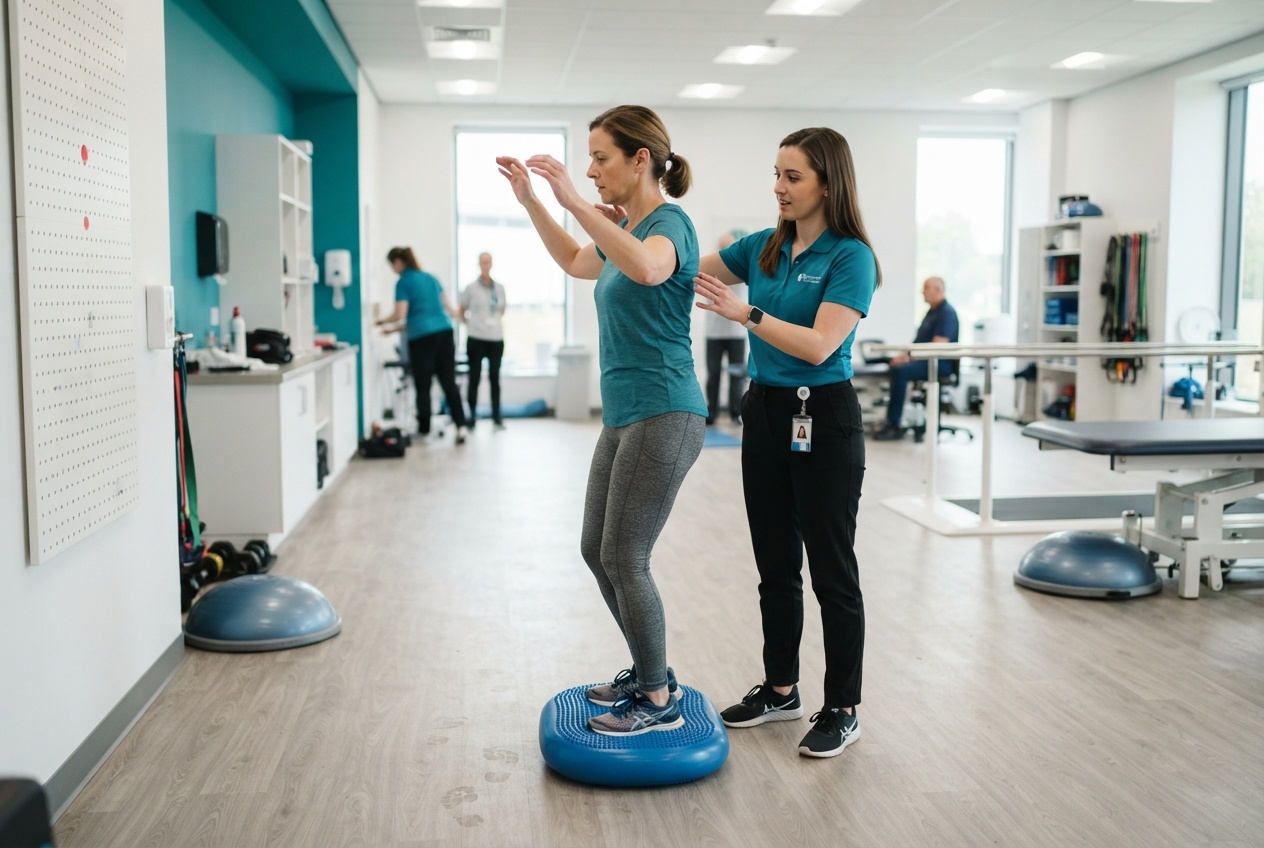
Concussion is a functional injury — and it needs a functional assessment
A concussion is a form of mild traumatic brain injury caused by a blow to the head or body, or a rapid movement that causes the brain to shift within the skull. It primarily disrupts how the brain works rather than its visible structure, which is why routine imaging is often normal.
Concussion symptoms differ widely from person to person. One patient may struggle mainly with headaches and light sensitivity; another with dizziness when turning their head; another with concentration and fatigue. An NTI concussion evaluation identifies which systems are affected — commonly described as symptom clusters or profiles — so that care can be targeted rather than generic.
Systems assessed
Symptoms
Standardized symptom scales capture severity and pattern.
Cognition
Screening of memory, attention and reaction time.
Balance
Static and dynamic balance and gait.
Vision & eye movement
Tracking, focusing and convergence.
Vestibular function
Symptom provocation with head and eye movement.
Cervical spine
Neck involvement that may contribute to headache and dizziness.
How the evaluation works
Injury history
How and when the injury occurred, immediate symptoms, any prior concussions and how symptoms have changed since.
Red-flag screening
Assessment for signs that would require urgent imaging or emergency care.
Multi-domain testing
Symptom, cognitive, balance, oculomotor and vestibular measures, along with a neck examination.
Profile and plan
Findings are organized into a symptom profile, which guides a concussion management plan and recommendations for activity, school or work.
What patients can expect
Some parts of the assessment intentionally involve movement of the head and eyes, which can temporarily increase symptoms such as dizziness or headache. This is expected and helps identify what needs treatment; your clinician will proceed at a pace you can tolerate.
You will receive clear guidance on activity levels, screen use, sleep and gradual return to normal routines — current evidence generally supports a short period of relative rest followed by a gradual, symptom-guided increase in activity rather than prolonged complete rest.
Frequently asked questions
Can a concussion happen in a car accident without hitting my head?
Yes. Rapid acceleration and deceleration forces, such as those in a collision, can cause the brain to move inside the skull and result in concussion even without a direct impact.
How long does concussion recovery take?
Many people recover within a few weeks, but recovery varies considerably. Some individuals experience symptoms that persist for months. A structured evaluation helps identify factors that may be slowing recovery.
Should I stay in a dark room until I feel better?
Prolonged strict rest is generally no longer recommended. A brief period of rest followed by a gradual, guided return to light activity is often more helpful. Your clinician will give you individualized guidance.
When can I return to sports or physically demanding work?
Return to high-risk activity should follow a stepwise progression and clinical clearance. Returning too early can risk prolonged symptoms or further injury.