Traumatic Brain Injury Rehabilitation
Coordinated, goal-directed rehabilitation that addresses the physical, cognitive and emotional effects of brain injury — organized around what matters most in each patient's daily life.
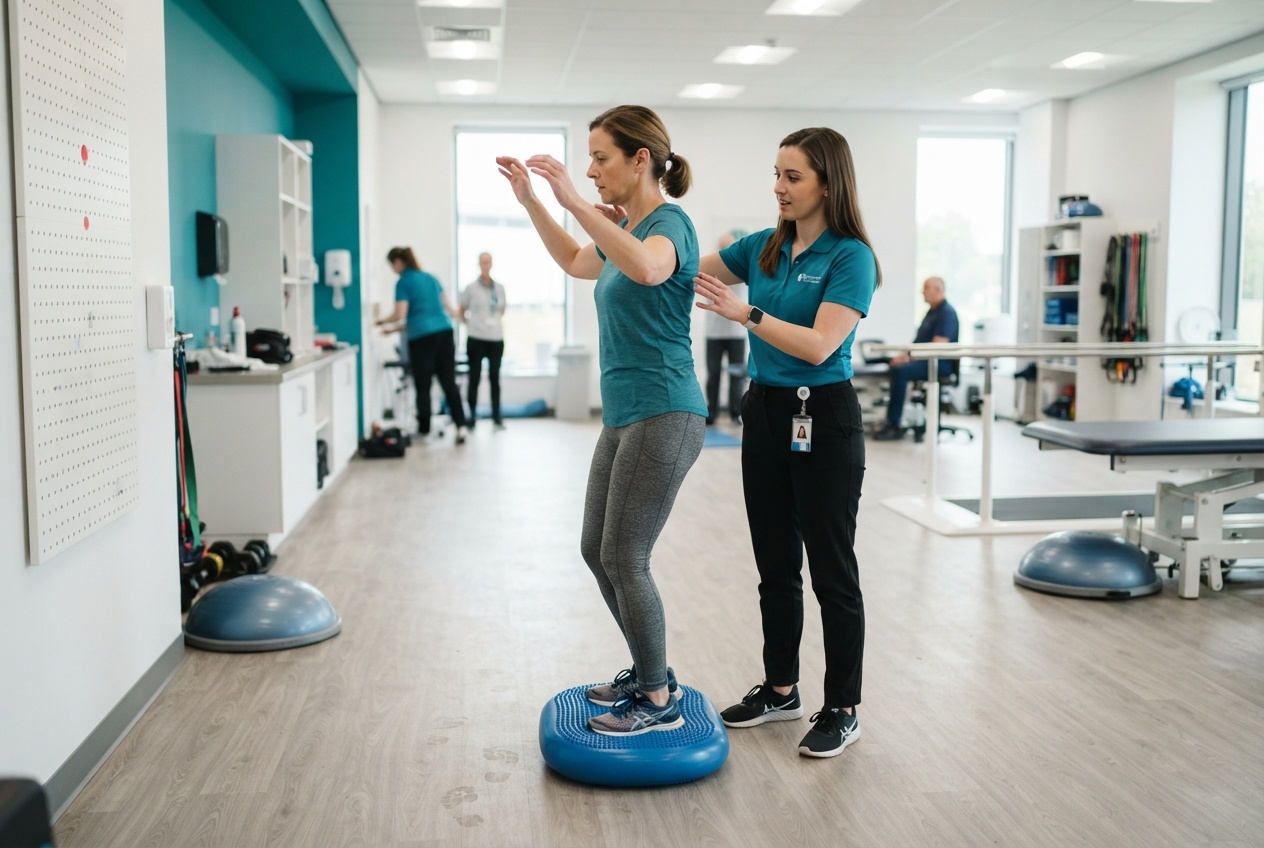
Rehabilitation built around function, not just symptoms
Brain injury can affect many aspects of life at once — physical comfort, the ability to think and remember, emotional stability, sleep, work and relationships. Rehabilitation aims to help the brain recover and adapt, using the nervous system's capacity for change (neuroplasticity) while also teaching practical strategies to manage ongoing difficulties.
At NTI, TBI rehabilitation begins with a thorough evaluation and is organized around specific, measurable goals agreed upon with each patient: returning to work, driving comfortably, reading for longer periods, managing headaches or reconnecting with family activities. Each component of care is chosen to serve those goals, and progress is reviewed regularly.
Areas addressed
Cognitive rehabilitation
Restorative exercises and compensatory strategies for memory, attention and organization.
Vestibular & balance
Coordination with vestibular therapy for dizziness and balance impairment.
Headache management
Medical and behavioral strategies for post-traumatic headache.
Sleep & fatigue
Addressing disrupted sleep and pacing energy throughout the day.
Emotional health
Psychological support for mood, anxiety and adjustment.
Return to activity
Graduated planning for work, school, driving and daily responsibilities.
How rehabilitation works
Comprehensive baseline
Findings from TBI evaluation, cognitive assessment and other testing establish where each patient is starting from.
Goal setting
Patient and clinicians identify priority goals in everyday terms and agree on how progress will be measured.
Coordinated treatment plan
The plan may combine services offered at NTI with coordinated referrals to physical, vestibular, occupational, speech or vision therapy specialists as needed.
Regular review
Progress is reviewed at defined intervals and the plan is adjusted — intensifying, changing or stepping down care as appropriate.
Transition and maintenance
As goals are met, patients receive a maintenance plan and strategies for continued independence.
What patients can expect
Rehabilitation is an active process. You will be asked to practice strategies between sessions and track symptoms and activities, often with simple logs. Family members or support people are welcome to participate where helpful, since they often play an important role in recovery.
Recovery from brain injury is rarely linear — there may be good days and setbacks. Your team will help you understand this pattern and adjust the pace accordingly. The duration of rehabilitation and the extent of recovery vary from person to person and cannot be predicted with certainty.
Frequently asked questions
Is it too late for rehabilitation if my injury was months or years ago?
While some recovery happens most rapidly in the early period, many people continue to benefit from rehabilitation and strategy training well after an injury. An evaluation can determine what may still be helpful.
How long does TBI rehabilitation last?
It depends on the nature of the injury, the goals involved and how each person responds. Plans are reviewed regularly so care continues only as long as it remains useful.
Will I work with more than one specialist?
Often, yes. Brain injury commonly affects several systems, so care may involve neurological, psychological and rehabilitation professionals working from a shared plan.
Can family members be involved?
Yes, with your permission. Education for family members about brain injury and recovery strategies can be very helpful.