Traumatic Brain Injury Evaluations
A multi-domain evaluation designed specifically for people who have sustained a blow, jolt or acceleration–deceleration injury to the head — bringing together every piece of the clinical picture.
Why a dedicated TBI evaluation matters
A traumatic brain injury occurs when an external force disrupts normal brain function. The head does not need to strike anything — rapid acceleration and deceleration, such as in a rear-end collision, can be enough. TBI ranges from mild (including concussion) to moderate and severe, and its effects may be physical, cognitive, emotional or behavioral.
Because no single test can capture all of these dimensions, a TBI evaluation at NTI is structured to examine each domain systematically. It considers how the injury happened, what changed afterward, how the brain is functioning now and what other factors — such as neck injury, pain, sleep disruption or psychological stress — may be contributing.
Who may benefit
- People with a known head impact or whiplash-type injury who have new neurological, cognitive or emotional symptoms
- Patients whose symptoms have not improved as expected after an initial emergency or primary care visit
- Individuals with a prior moderate or severe TBI who need ongoing specialty assessment
- Patients whose referring provider is seeking a comprehensive neurological opinion and documented findings
Components of the evaluation
Injury characterization
Mechanism of injury, any loss of consciousness, memory gaps around the event (post-traumatic amnesia), immediate symptoms and early medical care are documented in detail. These factors help classify injury severity.
Records and imaging review
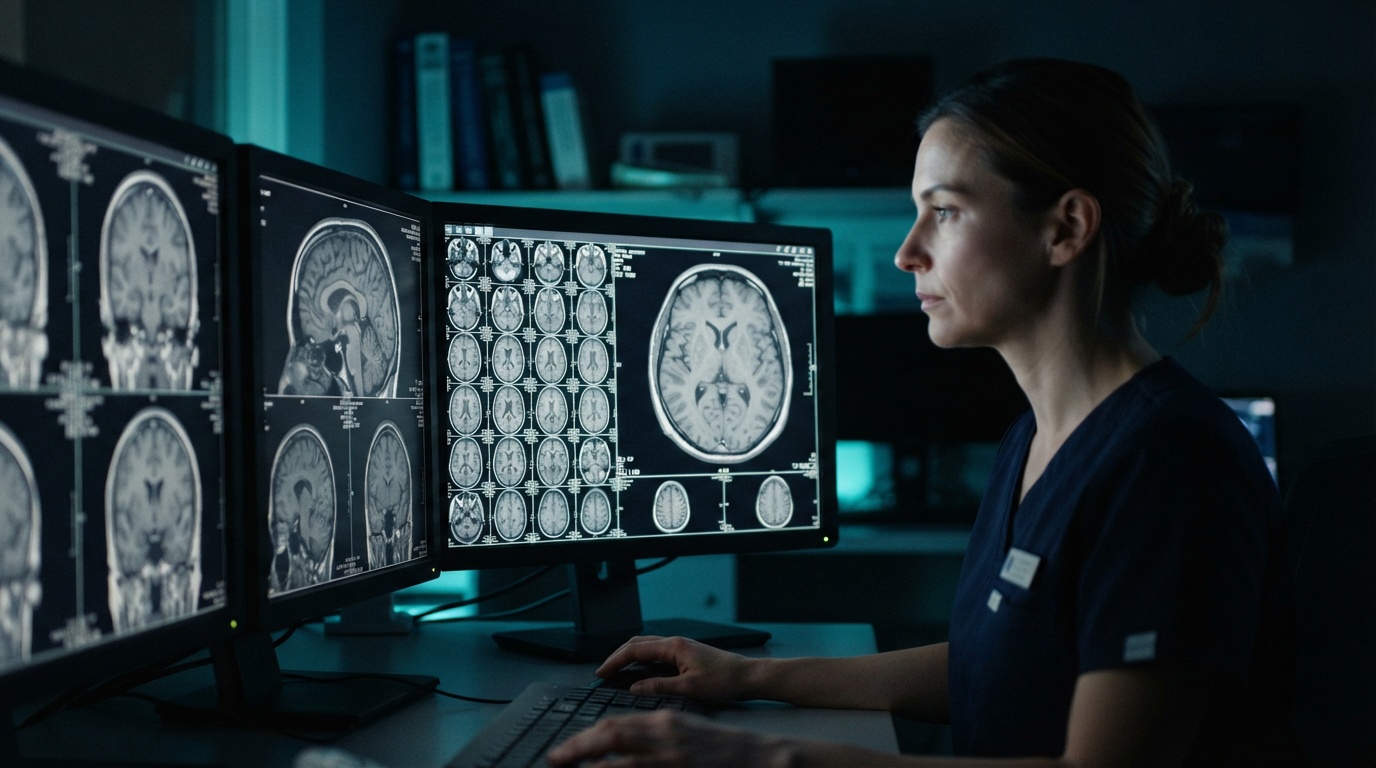
Emergency department notes and any CT or MRI reports are reviewed. If imaging has not been performed and is clinically indicated, appropriate referral is arranged.
Neurological examination
A full examination including cranial nerves, eye movements, motor and sensory function, reflexes, coordination, gait and balance.
Cognitive and emotional screening
Standardized measures of cognition, mood, anxiety and post-traumatic stress, with referral for comprehensive cognitive assessment when indicated.
Supportive diagnostics
Where clinically appropriate, tests such as qEEG brain mapping may be used to provide additional functional information.
Summary and care plan
All findings are integrated into a clinical summary with individualized treatment recommendations.
What patients can expect
A TBI evaluation may be completed over one or more visits, depending on the number of domains that need to be assessed and how well you tolerate testing. Your comfort matters: if symptoms such as headache or fatigue increase, breaks are built in.
You will leave with a clear understanding of the findings so far, any additional tests recommended and the proposed next steps. With your written authorization, a detailed report is provided to your referring and treating providers to support coordinated care.
If you or someone else has a worsening headache, repeated vomiting, seizure, increasing confusion, slurred speech, weakness or numbness, unequal pupils or difficulty waking after a head injury, call 911 or go to the nearest emergency department.
Frequently asked questions
Can I have a brain injury if I never lost consciousness?
Yes. Most concussions and mild TBIs occur without loss of consciousness. Feeling dazed, confused or "not right" immediately after an injury can also indicate an alteration in brain function.
My imaging was normal. Does that mean I don't have a TBI?
Not necessarily. Standard CT and MRI scans are designed to detect structural injuries such as bleeding or fractures. Many mild TBIs do not produce visible changes on routine imaging. Diagnosis relies on the overall clinical picture.
How is TBI severity determined?
Clinicians consider factors such as the duration of any loss of consciousness, the length of post-traumatic amnesia, the initial level of responsiveness and imaging findings. Severity at the time of injury does not always predict the course of recovery, which varies between individuals.
Will my report be shared with other providers?
Only with your written authorization, and in accordance with applicable privacy law. We routinely communicate with referring providers when patients authorize it, to support coordinated care.