qEEG Brain Mapping
Quantitative electroencephalography measures and analyzes the brain's electrical activity, providing objective data that supports a comprehensive neurological evaluation.
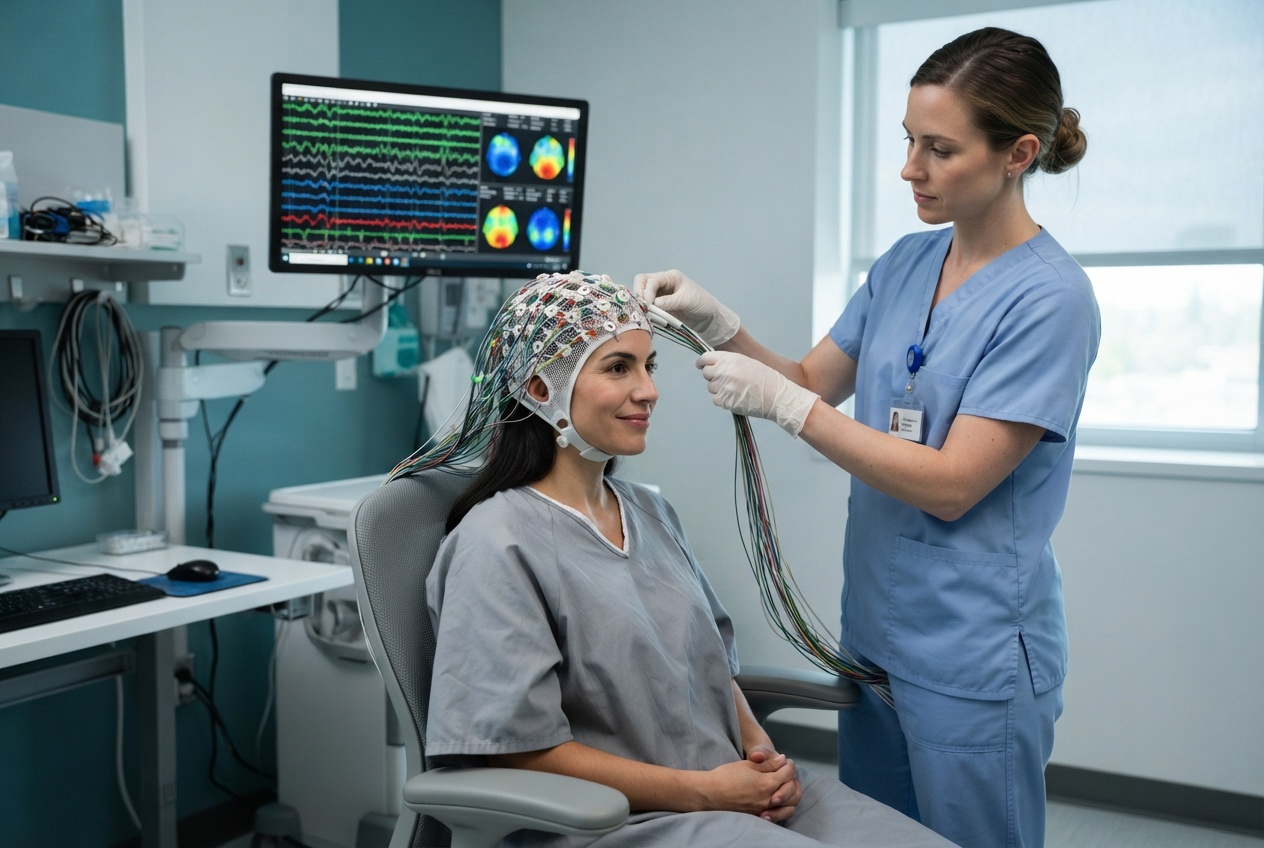
What qEEG measures
An electroencephalogram (EEG) records the small electrical signals produced by brain cells through sensors placed on the scalp. Quantitative EEG — often called qEEG or brain mapping — takes this recording a step further. Using computerized analysis, the EEG signal is broken down into its component frequencies (such as delta, theta, alpha and beta activity), and measures like power, symmetry and connectivity between regions are calculated.
These values can be compared with normative reference databases and displayed as color-coded topographic maps. The result is a visual and numerical summary of brainwave patterns that clinicians can review alongside the history, examination and other test results.
qEEG is a supportive tool. It does not independently diagnose or prove a traumatic brain injury, and an atypical pattern can have many causes, including medications, sleep loss, prior conditions and recording factors. At NTI, qEEG findings are always interpreted by qualified clinicians in the context of the full clinical evaluation.
When qEEG may be considered
Following a clinical evaluation, qEEG may be recommended to provide additional information for patients experiencing:
qEEG is also used to help design and monitor neurofeedback therapy protocols, where an individual's brainwave profile informs training targets.
How a qEEG recording works
Preparation
You will be asked to arrive with clean, dry hair free of oils or styling products, and to follow instructions regarding caffeine and sleep beforehand. Do not stop any prescribed medication unless your physician instructs you to.
Sensor placement
A fitted elastic cap containing multiple sensors is placed on the head using a standardized positioning system. A small amount of conductive gel is applied at each site to obtain a clear signal.
Recording
While seated comfortably, brain activity is recorded during resting conditions with eyes open and eyes closed, and sometimes during a simple task. You will be asked to stay relaxed and minimize movement.
Artifact review and analysis
Recordings are carefully reviewed to remove artifact from blinking, muscle tension and movement before quantitative analysis is performed and topographic maps are generated.
Clinical interpretation
The findings are reviewed by the clinical team and integrated with your history, examination and other assessments. Results are discussed with you at a follow-up visit.
What patients can expect
qEEG is noninvasive and painless. No electricity is delivered to the brain — the sensors only record. Including preparation, the appointment usually takes about an hour to an hour and a half. Afterward you can return to normal activities; you may want to wash your hair to remove the gel.
During your results visit, your clinician will explain what the maps show in plain language, how the findings relate — or do not relate — to your symptoms, and whether they inform treatment decisions.
Frequently asked questions
Can qEEG diagnose a brain injury?
No. qEEG cannot by itself diagnose or confirm a traumatic brain injury. It provides objective information about brainwave activity that clinicians consider along with the history, neurological examination, cognitive testing and, where appropriate, imaging.
How is qEEG different from an MRI or CT scan?
CT and MRI show the structure of the brain. qEEG measures electrical function over time. The two answer different questions and are sometimes used together.
Is the procedure safe?
Yes. qEEG passively records signals the brain already produces. There is no radiation and nothing is transmitted into the body. Mild skin sensitivity to the gel is uncommon.
Will my medications affect the results?
Some medications can influence EEG activity. Please provide a complete medication list so the clinical team can account for it during interpretation. Never stop a medication without guidance from your prescribing physician.
Do I need qEEG before neurofeedback?
A qEEG is commonly used to individualize neurofeedback protocols and provide a baseline for tracking change. Your clinician will advise whether it is appropriate in your case.