Neurofeedback Therapy
A noninvasive brain-training approach that uses real-time feedback from brainwave activity to support self-regulation and neurological rehabilitation when clinically appropriate.
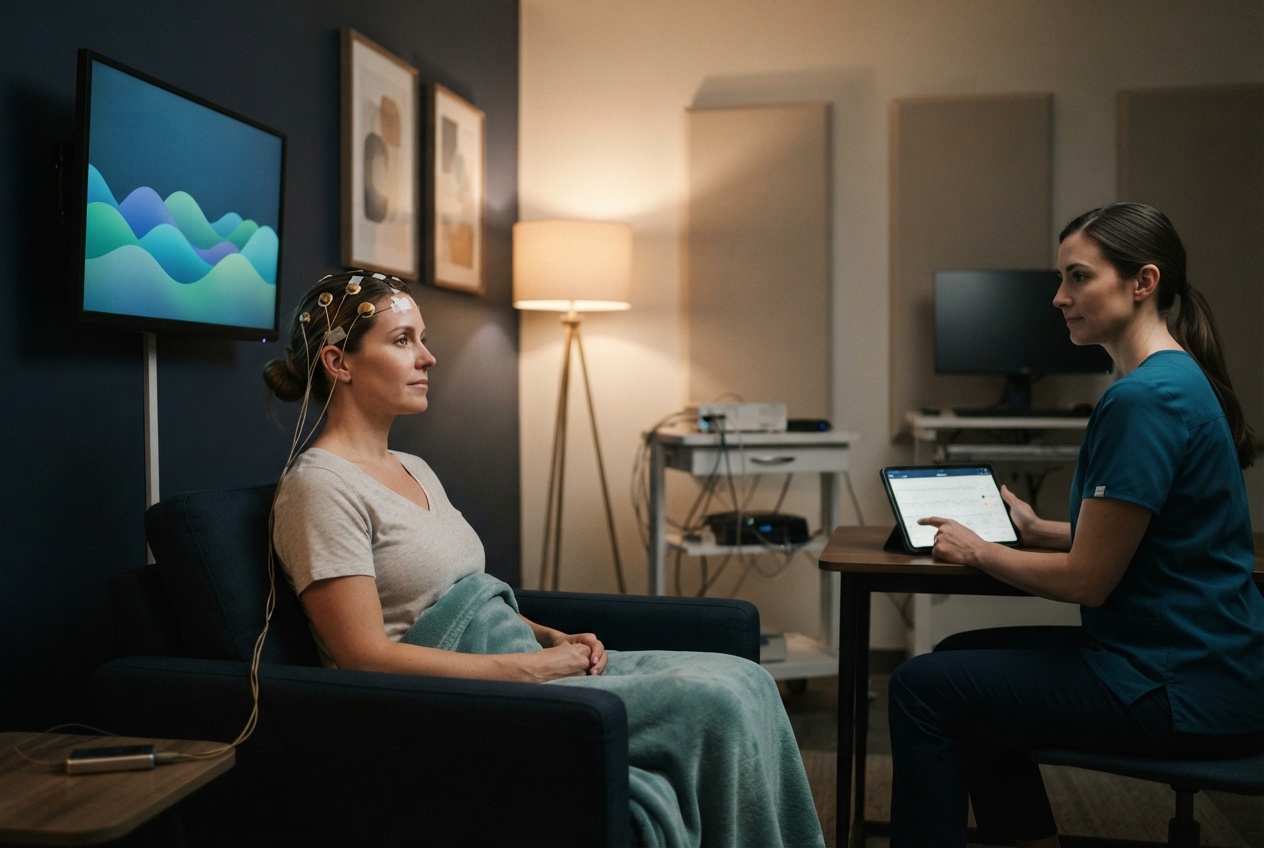
Learning to regulate brain activity
Neurofeedback, also called EEG biofeedback, is a form of biofeedback that focuses on brain activity. Sensors on the scalp measure brainwaves in real time, and specialized software converts selected patterns into visual or auditory feedback — for example, a video that plays smoothly or a tone that sounds when brain activity moves toward a targeted range.
Over repeated sessions, this feedback is intended to help the brain learn to produce those patterns more consistently, a process known as operant conditioning. Unlike stimulation-based therapies, neurofeedback does not send any signal into the brain; the brain itself does the work of adjusting.
Symptoms it may help address
Within a comprehensive care plan, neurofeedback may be considered for patients experiencing:
Neurofeedback has a growing research base, but the strength of evidence differs by condition. Its use for symptoms after brain injury is considered an emerging application, and studies to date vary in size and quality. NTI offers neurofeedback as a complementary approach, not as a replacement for established medical and psychological treatment, and results vary between individuals.
How neurofeedback therapy works
Clinical evaluation
A clinician reviews your history and symptoms to determine whether neurofeedback is an appropriate part of your care plan.
Baseline assessment
A qEEG recording and symptom measures often provide a baseline and help identify individualized training targets.
Protocol design
Training parameters — sensor locations and the brainwave patterns to reinforce — are selected based on your clinical picture and assessment findings.
Training sessions
You relax in a comfortable chair, watching or listening to feedback while sensors record activity. Sessions are typically held one to three times per week.
Reassessment
Symptoms are tracked throughout and formally reassessed at intervals to determine whether to continue, adjust or conclude training.
What patients can expect
Neurofeedback is painless and requires no medication. Each session generally lasts 30 to 60 minutes including setup. Many protocols involve a series of sessions over several weeks to months, because learning occurs gradually. Some people notice temporary fatigue, headache or mild changes in sleep after early sessions; these are reported to your clinician so the protocol can be adjusted.
Frequently asked questions
Does neurofeedback put electricity into my brain?
No. The sensors only read brain activity. The feedback you see or hear is generated by a computer, and your brain responds to it naturally.
How many sessions will I need?
The number varies by individual and goals. Your clinician will recommend an initial series and reassess progress at regular intervals rather than committing to an open-ended course.
Are the effects permanent?
Research on the durability of neurofeedback effects is still developing. Some individuals report sustained benefit, while others may not respond. Outcomes cannot be guaranteed.
Can I continue other treatments during neurofeedback?
Yes. Neurofeedback is typically combined with other components of your care plan, such as psychological therapy, vestibular or cognitive rehabilitation, and medical management.